Wednesday, March 10, 2010

Wednesday - Fire House Meetin'


Wednesday

On Wednesday, I headed to Carapegua, a town that’s an hour away from Ybycui (my pueblo) by bus. I left the house around ten to 7am, and due to the lovely road conditions for once, I made it in in record time and caught the 7:30 bus, though I didn’t have time to stash my bike somewhere, so I brought it along. In Carapegua, I met up with 5 other PCVs from the area to talk about a new project regarding forest fire prevention in the national park called Salto Cristal that’s near Ybycui. We met in the Fire House of the Volunteer Firefighters of Carapegua, so it was a nice journey down memory lane for me to my days at West Barnstable Fire Department last year. I felt right at home. Also I stopped in an agro store on the way there and bought some seeds for my garden! Cherry tomatoes, sweet corn, carrots, green pepper, and onion. Very exciting. After the meeting, I headed to a local restaurant patio to hang out with the PCVs from the meeting and eat an empanada for an early lunch.

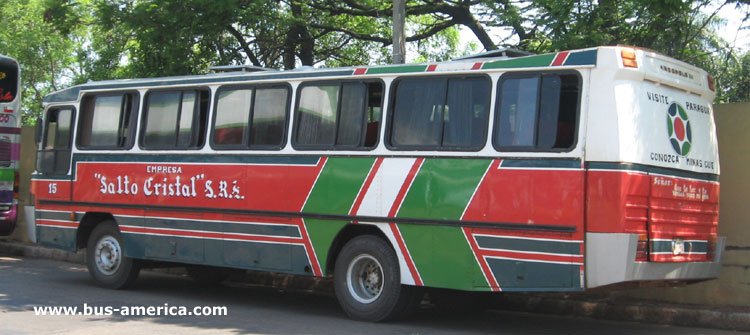
The travel home was way more frustrating because two buses headed for Ybycui, the "Salto Cristal" line (see picture) passed me saying they didn’t have room for my bike in the storage area. Mbore! So I waited at the road crossing for 2 hours in the middle of the day before finally a bus came that had room. I was stressing out as well because I had a commitment to give another charla about beekeeping at 4:30pm. But, I got to Ybycui just fine after all, stopped at another agro shop and bought some lettuce, swiss chard, and zucchini seeds, and then biked back out to my community. 45 minutes in the hot sun, but at least there was a good breeze. Nevertheless, that was the second shirt that I sweated out for the day. And I mean completely – belly sweat, back sweat, and chin sweat. My personal favorite.

So I got to my host family’s house with enough time to sit for a bit, eat leftovers from lunch, shower, and hop back on my bike to head 1k down the road to the church for the meeting. Less people came this week, but still a good turnout – 10, mostly men. So I left out my goofy icebreaker due to the more somber group dynamic, but the rest of the charla went very well. We covered when to go the apiary, what is important to bring with you, what kind of equipment you need to work bees, and finally the appropriate etiquette for working around Africanized “killer” bees so that they get the least angry as possible. Activities included drawing on my stick figure Don Juan what he needs to go to the apiary and a check for learning game called Matched Up! in English or Upeichaite! in Guarani. This was a favorite of the Croppies in Training. It’s fun. After my charla, the meeting continued as I passed out plans on how to make your own hive, bee veil, and smoker. We will see at next week’s meeting where the group decides they want to go from here.

After the charla, I head to Na Tomasa’s house to watch some volleyball and térere with her. I find out that the tree that will be cut down to make my doors, windows, and bathroom structure with be taken out by a chainsaw on Friday, “if God wants it”. I bike home as the sun is setting over the horizon, and am quickly put to work filling dough with a soy meat/veggie concoction for the soy empanadas for dinner. My host sister Vero (age 16) makes the dough, I fill and close up, and host sister Isi (age 13) deep fries them over the fire in the kitchen. Delicious! Shortly after, I head to my room where I stay up much too late writing part of this blog entry.

Friday, February 26, 2010

Tuesday - Charla Makin'


Tuesday

I wake up this morning with absolutely no commitments, which is very nice. I water my seedlings, study some Guarani, brainstorm possible slogans for the fire prevention project meeting I’m going to tomorrow, have cocido and croquitos for breakfast, and then finish the rest of The God of Small Things. Wow. That is one amazing book. After that, I need some time just to let my mind wander, so I join my host father in shucking some peanuts for an hour. Then I plan out my 2nd beekeeping charla (informal teaching session) for Wednesday, first in English for myself, complete with icebreaker and a game for check for learning. Then I translate it into Spanish and make up the charla paper that has the most important points and pictures written on it to guide the session. Lindo (pretty) is key for charla paper in terms of impressing Paraguayans. So I make sure my lines are straight, my handwriting is neat, and my pictures are as decipherable and colorful as possible. I write the charla paper in Spanish, but at the meeting I will translate most of it into Guarani as I am speaking. This is for a few reasons. First of all, there are some adults who are illiterate or semi-illiterate, and these people only speak/understand Guarani. Secondly, even of those who can read, most of them can only read in Spanish (even though they mostly speak Guarani). This is because Guarani was forbidden to be taught in schools for many years under the dictatorship of Straussner, who ruled Paraguay from the 1940s until the late 1980s. Teenagers nowadays can generally read both Spanish and Guarani, but they would not be attending the meeting to translate for their parents. So yeah….language is a complicated thing.

After lunch, I take a short rest break in my room, just laying down and listening to some music. I’m feeling kind of down, but then all of a sudden the sun breaks through my window and I realize I really want to go for a bike ride. And it’s finally cool enough out so I can actually do that, even though it only 2pm. So I do. I take my bike out for a good stroll, probably about 5k, out to a neighboring community and back, where I haven’t been in a while. When I get back, I’m sweaty but really craving some térere. So I serve some térere to the adult circle (host father, mother, and visiting host aunt), who are pulling peanuts off the dried plants. Then I’m off again for a short run, because I’m already gross and plus the weather is just too wonderful to pass up. After I get back, I shower, finish my last charla paper for the Matched Up! (“Upeichaite!”) check-for-learning game I’m going to do (got some guapa points for that from the whole family), and then go to bed.

p.s. the picture above is from a charla during training, but you get the idea. Pretty fancy, no?

Monday, February 22, 2010

Monday - Green Truck Ridin', Croquito Luggin'

Monday

I set my alarm early, for 6am so that I would have enough time to maté a little with the host parents, get myself ready, and eat breakfast before catching the Green Truck into the pueblo at a little after 7am. The Green Truck is a beat-up old pickup whose owner operates it like a bus for the people in the communities out my direction (except he’s more reliable and has better hours than the Actual Bus). I ride in the bed of the truck with anywhere from 4-8 other people ranging from babies to grandpas and pay 5,000 Guarani for the honor. It takes us about ½ hour to get to town. I have a lot of things to do in town, and am pretty guapa at getting them done in good time. I go to the bank to withdraw money from my Peace Corps account (no ATM) and mail some letters at the post office, each of which costs 9,000 Guarani to send, or about $2 USD.

After that I go to a local corner store that has a copy machine and the lady there makes me copies of do-it-yourself equipment plans for my beekeeping charla on Wednesday. When I ask if she sells paper clips so that I can make up packets for each person, she instead insists that staples will work better, so I make up the packets in her shop and she staples them for me. So nice.  Then I go to the produce place and buy some green peppers and apples for the host family. After that, it’s off to the panaderia (bakery) where I buy 5 kilos of croquitos (small, hard, round-like cracker-bread) which is roughly the size of a very full garbage bag. I lug these down the street to the supermercado, where I buy 2 kilos of sugars, 2 kilos of rice, 500g of soy coffee, and 500g of dry soy meat. The supermercado owner is nice enough to let me leave all of my groceries there to pick up later because they are heavy.

Next, it’s to the cyber café (but not a café at all) to check my email and try to Skype Marissa. Try is the correct word because I had Skype all downloaded when the power went out for the whole pueblo. So I went outside to wait on the avenue, and it came back on in about ½ an hour. But then my next computer wouldn’t work with the microphone aspect, and by the time I finally got on a serviceable computer, she had to get ready for class. Dang!! But at least we got to talk some on G-chat. After that failure, it was over a few blocks to the ferretería (hardware supply store) to buy 275 bricks, a bag of cement, 9m of black 6-inch wide piping, and some wire screen – all for my new latrine. I ask if I can get a ride back to my community with the truck that will deliver my building materials and the answer is yes. So I wait 2 hours for the family of the hardware store to eat lunch and then get my stuff loaded. Meanwhile, I have gone to bring over my supermercado purchases, and on my way found a Thermo I liked (essential for térere on-the-go). While I was waiting for the ride, I lunched on an apple, Tangerine Fanta, some chipa my host mom gave me for breakfast, and some croquitos from the garbage bag. Also called a PCV friend and talked to her for a bit, and read the newspaper I had bought when the power went out.

Along with my bricks and croquitos, I am delivered just fine to my community. I sit and térere for a while with the family (Na Tomasa) who owns my future house to discuss what work is up for this week, and then upon their suggestion I also head over to my community contact’s house for a visit. My contact and I smalltalk, I ask about the possible meeting for Tuesday which she tells me will not be happening after all because the local Ag Extension agent from town can’t come, and then she gives me a big guilt trip about visiting Na Tomasa lately and not her. When she jokes that she’s not sure about visiting me in my new house in the future, I tell her-laughingly- that she “will have to get used to it.” That may have been a little harsh. But I don’t take those guilt trips from nobody no more. Or at least not to their faces. I let the guilt eat away at me slowly, later on, in the privacy of my mosquito net when I can’t sleep. But working on that! (The not feeling guilty part.)

That evening, I wash a bunch of clothes, by hand of course, just in time for some glorious rain. Well glorious for everything but trying to dry my clothes. So they get hung up all around my room, with my other things placed strategically around so as not to get dripped on. The satisfaction of some clean clothes and the rain finally coming does wonders for my mood, and I go to bed (before 8pm!) feeling guapa and refreshed by the cooler weather.

Sunday - Asado Eatin´


Due to numerous requests for me to answer the question, "What exactly do you DO down there?", for the past week, I´ve documented TO THE MINUTE (or maybe that´s just what you´ll feel like when you read it) my life and daily activities. So as not to overwhelm you, I´ve decided to just post a day or two at a time. Let it commence:

"A Week in the Life of Amanda, PCV"

Sunday

After a pretty social Saturday night, I slept in til 8am, meaning that I didn’t set my alarm and that’s when I happened to wake up. It was a pretty tranquilo morning for the host family in general as well. I read some of The God of Small Things, and studied some Guarani as well. The family across the street had invited me to have asado (barbeque) for lunch with them, so I showered and put on some nice clothes and went over to their house around noon. I helped a little bit with the sopa (another type of Paraguayan cornbread) preparation, and then we sat around and térere-ed until the asado was ready. It also happened to be Valentine’s Day, so I got a few more questions than usual about my boyfriend, i.e. why I don’t have one, am I sure I didn’t leave one in the U.S , am I going to look for one here, and is it prohibited for me to marry a Paraguayan? The asado was delicious, the birthday girl (family’s daughter who lives in town and was visiting for the day) was indifferent towards me, and after I got my hopes up due to an invitation to the local National Park with waterfalls and all, they left without me, without warning (I had gone to get my bathing suit). Wahh-wahh.

So I stayed at my host family’s house, complained to them a bit, and then had my host mother tell me it wasn’t good for me to go anyway, because I was getting over a cold. That was not exactly what I wanted to hear. But later on, I talked to another PCV friend about it and we ranted together about how “sin verguenza” or “shameless” that was for them to leave without even telling me , and I felt much better. In the evening, Mom and Ris tried calling me but the connection wasn’t good. Still, it was great to hear their voices for a bit! I read some more of my book, watched “Friends” and “2 ½ Men” in black-and-white on Spanish TV with my host sisters, ate dinner with the family, and went to bed around 9pm.

Monday, February 15, 2010

Tribute to The Host Family (small gripe included)

Peace Corps Paraguay requires us new Volunteers to live with a family for our first three months of service in site. At times it can be frustrating, due to a lack of choices most of us are used to having at this point in our lives. Examples include:

1. What to Eat – This depends highly on what is in season, which is great…and not so much. I ate an entire watermelon or cantelope at least once a day back in January. We picked up recently fallen mangoes from the tree next to the house and ate them by the bucketful. Now, there is no fruit in season in my site. We are in between the guayava season and the grapefruit season. So this is what my diet consists of-

Breakfast – Cocido (hot milk/water/sugar/charcoal drink)
Mandioca or Croquitos (small hard bread crackers)

Lunch – Spaghetti in a Cheesy Soup, with or without Beans

Dinner – Fried Eggs and Rice OR
Tortillas (deep fried dough, sometimes with onion) OR
Fresh Milk and More Mandioca

Now there is a bit more variety than shown here, but it is not uncommon to go a whole day here without fruit or vegetables as you can see. I have grown to enjoy a good piece of hot mandi’o with my meal, but for breakfast and dinner…it can be a bit much. That’s a lot of starch.

2. When To Eat – The family’s dining schedule revolves around both culture and work needs. This means we eat when usually it’s too hot/dark to do anything else.

6am – Mate
9am – Breakfast
-Térere-
1:30ish pm – Lunch
-Térere-
8:30pm – Dinner

This I have gotten used to as well, though sometimes I still find myself yearning for a good snack. And I don’t mean mandi’o.

3. How To Live Your Life – Now this is more for us female Volunteers as I understand it. Families here are so welcoming and generous; they regularly refer to me as their Norte “daughter” when introducing me to family or friends from out of town. However it comes with the price of someone (it can be anybody from an 8 year old to a grandmother) telling you That’s Not How You Wash Your Clothes or That’s Not How You Whitewash A Wall or You Want To Eat That In Milk, when Noooo…actually I do now know how to wash my clothes by hand how I like them and my whitewash job looks way better than your whitewash job and actually these guayava preserves taste better off the spoon than they do in milk.

Now I know that they just have my best interests in mind, and creativity/diversity of opinion is honestly not a revered or expected quality in Paraguayan culture. So many times, I don’t fight it. If my host mother brings me milk for the preserves, that’s how I eat them. If a little kid steals my whitewash brush, I don’t deck him to get it back. My laundry though – I ALWAYS stick up for the clothes. My way or the highway. And now they respect that.

THE BOTTOM LINE: In spite of all of these frustrations, I definitely understand and appreciate why I am living with a family right now. They have slowly taught me a great deal about Paraguayan culture, the Guarani language, how to get things done around here, how to receive a visitor, how to visit someone, etc. And on top of all of these things and more that I could never really understand in the classroom or by living on my own, they have supported me emotionally just by allowing me to partake in their family life and share in their daily schedules. And I don’t think that I could know/feel like a part of the community half as much as I do already had it not been for living with host families. They are awesome.

The “remodel-ing” is coming along on my future house, and I have been thinking lately how my life will or will not change when I move out on my own. It will be wonderful to be able to cook for myself, though I am sure I will still eat “out” a lot when visiting families. My schedule will probably not change too much because it really IS too hot to do much of anything from 1-4pm everyday in the summer. Hopefully I will find a good mate partner in a neighbor or continue to have occasional mate visits with Na Tomasa, Na Merarda, and Na Mariana. It will be interesting, that’s for sure. I know that I will be watched probably just as closely when living on my own, so I still have to be congnisant of how I present myself (not too dirty, not too “chuchi” [fancy], not with too many material possessions, not TOO tranquilo). Maybe I am overthinking this a bit, but it does feel like life in a glass bowl quite often. We will see what happens. And I’ll let you know.

STAY TUNED for next time: “Flip This House! [Paraguay!]” – a step by step account of the process it takes to get one Peace Corps Volunteer living on her own, safely, securely, and reasonably comfortably in a small valley in the 9th Department of Paraguay.

Wednesday, February 10, 2010

I want YOU...to tell me what to write about.


Here´s the God´s honest truth:

I am feeling a bit crappy at the moment. I have an awful cold, have been questioning lately what I´m doing here, and am frustrated that I am not more of a help to people here OR back home. Also, my house-to-be is coming along well, but there´s so much to do. And not much room for me to help, both in terms of available tools and in gender roles. Hopefully I will be in in early March. Don´t worry, I am dealing. Writing letters, running, taking time for myself to read, etc. And I know it´s one of many rough patches. Opening the packages and letters I got from you all this week has helped immensely. I can´t thank you enough!

On to the positive - Today my friend Kendall, a Beekeeping PCV, is coming to help me give my first'ever charla or talk, in site. Subject: Why We Like Bees and Why We Want to "Keep" Them Sustainably Instead of Just "Having" Them. I hope people show up. Heaven knows I have done enough visits to invite people in the past 2 days. I am very much looking forward to eventually moving into my own house, being able to openly cook for myself, eat what I want to, use my computer, and listen to music. Also, start my garden! I´ve already planted some seeds in starter containers, but need to do more.

Ok, so back to the title of this post. Sometimes Life just gets overwhelming, especially when you think of how to try and write about it. I´m at one of those points when there´s so much to say I can´t really say anything at all. Can you guys help me out? What do you want to hear about? Respond to this post, email me, Fb message me, text me, anything...

In an attempt to inspire myself as well as pick up the mood of this blog, I would like to share a little Mary Chapin Carpenter with you all, as she is who I am currently listening to on GrooveShark.

"I Take My Chances"

I took a walk in the rain one day on the wrong side of the tracks
I stood on the rails till I saw that train
Just to see how my heart would react
Now some people say that you shouldn't tempt fate
And for them I would not disagree
But I never learned nothing from playing it safe
I say fate should not tempt me

I take my chances, I don't mind working without a net
I take my chances, I take my chances every chance I get

I sat alone in the dark one night, tuning in by remote
I found a preacher who spoke of the light but there was brimstone in his throat
He'd show me the way according to him in return for my personal check
I flipped my channel back to CNN and I lit another cigarette

I take my chances, forgiveness doesn't come with a debt
I take my chances, I take my chances every chance I get

I've crossed lines of words and wire and both have cut me deep
I've been frozen out and I've been on fire and the tears are mine to weep
Now I can cry until I laugh and laugh until I cry
So cut the deck right in half, I'll play from either side

I take my chances, I pay my dollar and I place my bet
I take my chances, I take my chances every chance I get
I take my chances, I don't cling to remorse or regret
I take my chances, I take my chances every chance I get
I take my chances

I take my chances

Thursday, January 21, 2010

Peanut Butter, Cake Debt, and T-ray.


Manduvi Hape

One of my first trips to the field or kokue happened this past week for a manduvi (peanut) hape. I went with three of my six host siblings to turn over the peanut plants that they had already pulled out of the ground so that they could dry completely. It was fun to do something physical, and the walk up the mountain to where the field is was beautiful. Here, they like to eat peanuts ground up, with milk and sugar. I decided yesterday to shake up their world a little bit and try to make some peanut butter. Here are some pictures documenting the day and a half long process. First I had to grab a bunch of the dried plants and take the peanuts off. Then I proceeded to shuck the peanuts…not quick OR easy. I continued shucking the next morning, then washed the peanuts and dried them. Next, I roasted the peanuts in a pot over a fire. Then I rolled the hot peanuts in my hands to work the next layer of skin off. Finally I molinar’ed or ground the peanuts at the neighbor’s house then brought the bowl back to add some salt, sugar, and sunflower oil. Voila! Peanut butter! (It actually looks more like cooked ground beef…but it’s DELICIOUS.)


One Month In and ALREADY In Gambling Debt


So what can I say…the family’s gambling gene has awoken in my blood. Noooo, just kidding, but due to some compromise to Paraguayan culture, I did find myself in some cake debt this week. It all started Sunday afternoon when I went to a carerra hape with my host sister Vero. The main event was a 100m race between two men in their 50s, both husbands to women in my comite. Lots of people bet money on who would win, and the two men bet between themselves as well. This is the norm for just about any game or sport here, from a card game to a pickup volleyball game. The loser buys the gaseosa (pop) or beer. A little while later, someone asked me if I would race, and I said sure, but not for money. I offered to race for cake instead. No one could quite grasp this concept, but about the 5th time I explained it, something clicked.


So I found myself running against Carmen, one very guapa and very strong lady from my comite. If she lost she would make me budin, a kind of bread pudding/flan, and if I lost I would make her cake. We had some difficulty starting off the race 1) because I didn’t understand (and still don’t) the system of self-starting - taking 3 big steps and then sprinting off and 2) because Carmen is deaf and we have an interesting time communicating as it is, much less trying to decide how to start a race. Anyway, she won just by a step or two, so I made her some lemon cake today, which she told me she really liked. It was so much fun, especially seeing how all the little girls got into it. They warmed up with me, and two of them challenged me to separate races on the walk home. Carmen’s and my challenge was the only race of girls or women on that day. Kuñas (girls/women) represent!


Egg diversity - 1 double-yolk, 2 guinea hen, 1 blue


Mate and Térere


Térere and mate are the drinks of Paraguay, and represent not only a gastronomical custom, but an intensely social experience as well. Here’s how it works:


Let’s start with the equipment needed. First of all you need a guampa, or cup-like receptacle to drink out of. It can be made of wood, cow horn, or metal.


Next you need a bombilla. This is a metal straw with a small spoon-like filter at the bottom to keep out the yerba when you are drinking.


Now you need some yerba mate. This green substance is made of ground leaves from the yerba tree which is grown here in Paraguay. This provides the base for the flavor of your mate or térere.


And now you have some choices to make. Many Paraguayans add additional pohas or herbal remedies, to their térere or mate, which can generally be found growing around any Paraguayan household in the campo. Some pohas familiar to us Americans would be menta’i (mint leaves) or cedron (lemongrass) which are both very refrescante (refreshing) for térere. Other pohas are said to be good for settling your stomach or calming your nerves.


Ok, so here’s the main difference between mate and térere. Mate is made using hot (sometimes scalding) water, usually drunk in the early morning or when it’s cold outside. Térere is drunk with cold (preferably icy) water and is drunk from mid-morning to late afternoon, and in large quantities especially when it’s really haku (hot) outside.

And here’s the social aspect. You don’t usually drink mate or térere alone. Instead, you drink it in a group. One person serves – usually the person who prepared it, or the youngest person in the circle. This person pours a bit of water into the guampa and offers it to their nearest neighbor. The neighbor takes the guampa, drinks the few swallows of yerba and poha flavored water, and hands it back to the server. The serving person then pours again, hands the guampa to the next person in the circle, and so on.


It’s like sitting down to have a cup of coffee with somebody, but a lot more personal. After all, you’re swapping spit. It’s also a commitment of at least half an hour or hour. To mate or to térere is to sit together, to relax, to have some conversation, and to hydrate in a tranquilo manner. It makes drinking and spending time together very intentional. If you are going to térere, that’s what you are going to do. No guzzling down a Gatorade here. You sit and drink in small amounts, slowly. Also, no multitasking here, with the exception of maybe shucking some beans or corn. Leave that book or television set at home.


Most of the best conversations I’ve had here in my site have been over early-morning mate. Many of the Paraguayan ladies I’ve met here are very open anyway, but mate really makes you feel comfortable with somebody. We’ve talked about birth control, the Paraguayan educational system, and land reform. And térere-ing under the mango tree with my host family has kept me sane on those hot days when all I could think about was how much I was sweating. We’ve talked community gossip, technical skill transfer, crop yields, and how to raise children. This picture is of where we usually sit to terere - mangoguype (under the mango tree).


Really, it comes down to sharing. Paraguay is all about sharing. People are generous here, there’s no doubt about that. So why not your tea in the morning as well? Or those cookies you just bought? Among Peace Corps friends, we use the verb “to térere” referring to how we share just about any kind of food or drink here – an apple, an empanada, a can of beer, or a bottle of pop. You might buy it, but you should maybe only expect to have a bite or two yourself. You offer it around to your friends, and they don’t hesitate to take a bite or a sip. But don’t worry, all your friends do the same for you. And it makes you feel good because you are sharing something you enjoy with people around you.


That’s just the Paraguayan way.

(*And the beer stays a lot colder when it’s shared between four people.)


My current host parents, Waldino and Mariana, terere-ing with me.